
It is worth setting a boundary first: we build the tool, we do not decide the treatment. Which indication makes sense, for which patient and at what point, is a decision for the health professional. What follows is what the tool makes possible, which is where we can speak with any authority.
Three things a virtual environment allows and reality does not
- Grading. A situation can be presented at 10 %, 40 % or 100 % intensity, and turned up when the professional decides. In the real world, exposure comes as it comes.
- Repeating at no cost. The same scene, as often as needed, identical. That makes sessions comparable from one week to the next.
- Stopping. The headset comes off and it is over. That reversibility is part of what makes exposure manageable.
What can be measured
A digital environment records what happens inside it: how long the user spent in each area, where they looked, what they avoided, how long a task took. It does not replace clinical assessment, but it gives something direct observation struggles to give: a series of data comparable over time. With two sessions a month apart you can see whether anything has shifted, and in which direction.
Multisensory stimulation and accessibility
Not all of it is exposure. A controlled environment also serves multisensory stimulation, psychomotor rehabilitation and rehearsing everyday situations — catching a bus, going into a shop, finding your way around an unfamiliar building — somewhere getting it wrong has no consequences. Cognitive accessibility is not an add-on there: it is the main design requirement, because an environment nobody understands is no use.
That forces a different kind of design: fewer things on screen, short instructions, no dependence on reading quickly, and the ability to leave at any moment. It is the same standard as a training simulator, with the demands turned up.
What is needed at the centre’s end
Less equipment than people assume and more judgement than usually gets allocated. Somebody on the clinical team has to define which situation is to be reproduced and at what gradations; without that, what comes out is an attractive demonstration nobody uses twice. And it has to be decided where it will be used: a fixed room with permanent kit is not the same proposition as something that will move between centres.
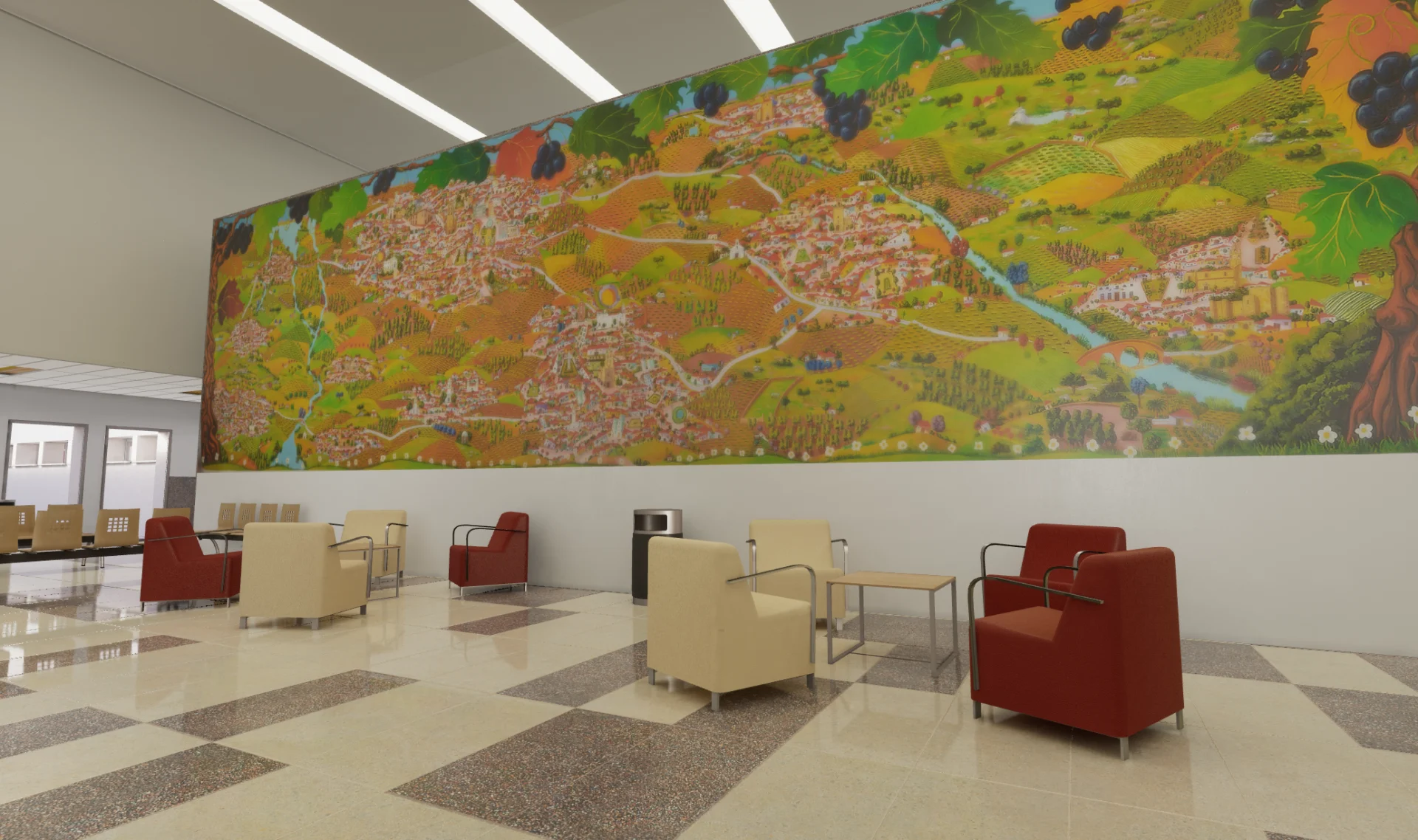
We take on this kind of commission in health and psychology, and in real healthcare settings such as the Hospital de Tierra de Barros. If you have a case in mind, tell us which situation you would want to reproduce and we’ll say whether it is feasible.